
The Story
It should be noted that this palace was not only impregnated with the spirit of the Renaissance but also with an eclectic one, a harmonious blend of influences, a feature very visible in the palace’s interior decorations. We know this from a painting depicting the Audience Hall at the moment of the reception of the Ottoman ambassador Yousouf Mouttaher Agha at the court of Prince Gabriel Bethlen (1625).
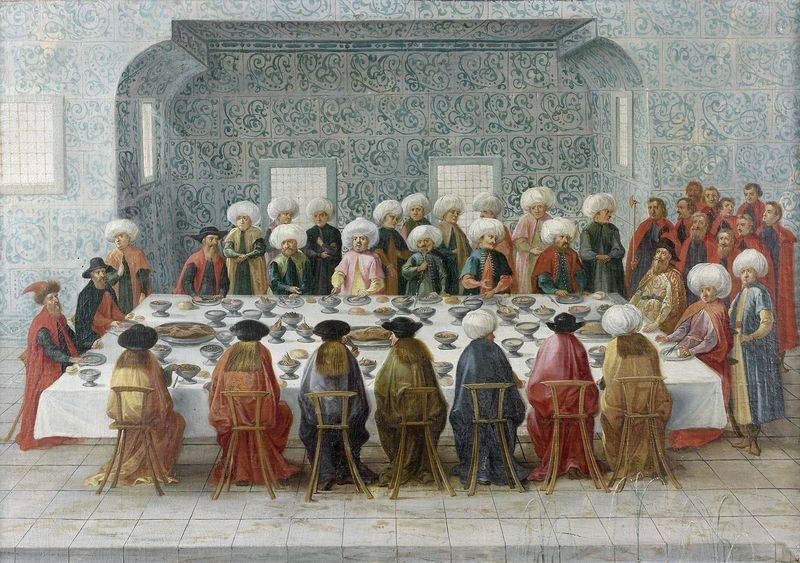
In the painting, we see that the walls of the hall were adorned with the famous Ottoman Iznik ceramic tiles. It seems that no fewer than 1,400 such tiles were ordered by the prince through his permanent ambassador in Istanbul, Mihály Toldalagi, in June 1623. Along with the shipment, two skilled Turkish craftsmen arrived in Alba Iulia, tasked with decorating two representative halls of the palace, one of them being the audience hall of his residence.
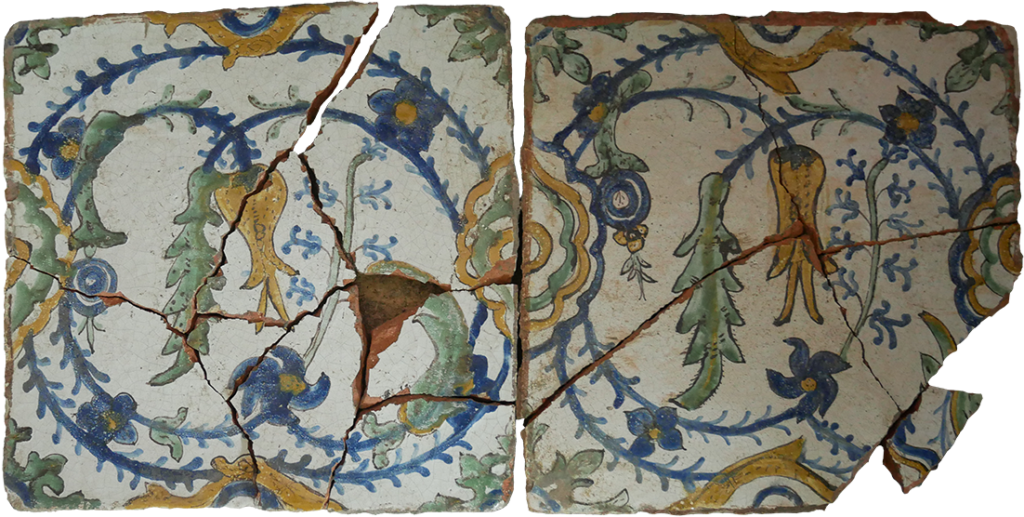
Over time, Iznik ceramics were later replaced by Vințu ceramics. In our museum collection, we possess two glazed terracotta tiles decorated with vegetal and floral ornaments inspired by Ottoman designs, crafted in the workshops of Vințu de Jos, the most important center of ceramic art in Transylvania at that time. The fragments come from the fill of vaults but originally adorned representative spaces of the princely palace.
How did we get here? The initial decorations of the Princes` Palace were likely affected by the Turkish-Tatar attack in September 1658. It is a tragic situation that compelled Prince Mihai Apafi I to undertake a series of repairs to the palace after 1666, when these ceramic tiles were ordered from Vințu by the best artisans of the Principality of Transylvania.